.png)
Agriculture is the industry most likely to be described to a sixteen-year-old in either of two wrong ways: as a dying business, or as a family inheritance. Our research suggests it is neither. The farming itself is consolidating, while the technical work around it — the engineering, the animal health, the machinery — is some of the fastest-growing work on this whole site.

These are the roles our data shows adding jobs, not just replacing people who leave. Two of them are reachable without a four-year degree.
Veterinarian
$130,100
Agricultural engineer
$98,590
Agricultural and food scientist
$81,970
Agricultural equipment mechanic
$63,850
Veterinary technician
$47,380
Conservation scientist or forester
$73,920
Working the land directly is shrinking. Farmers and ranchers earn a solid median of $89,900, but our data shows the number of those positions declining 3%, and that is before you account for how much of that income depends on owning the land. Agricultural workers earn $35,890 and the role is declining 2%. Logging is declining 5%.
This is not a reason to avoid agriculture. It is a reason to enter it through a skill rather than through general labour. The person who can diagnose a combine's hydraulics, run the animal health side of a dairy operation, or manage irrigation systems is the one whose work is getting more valuable, not less.
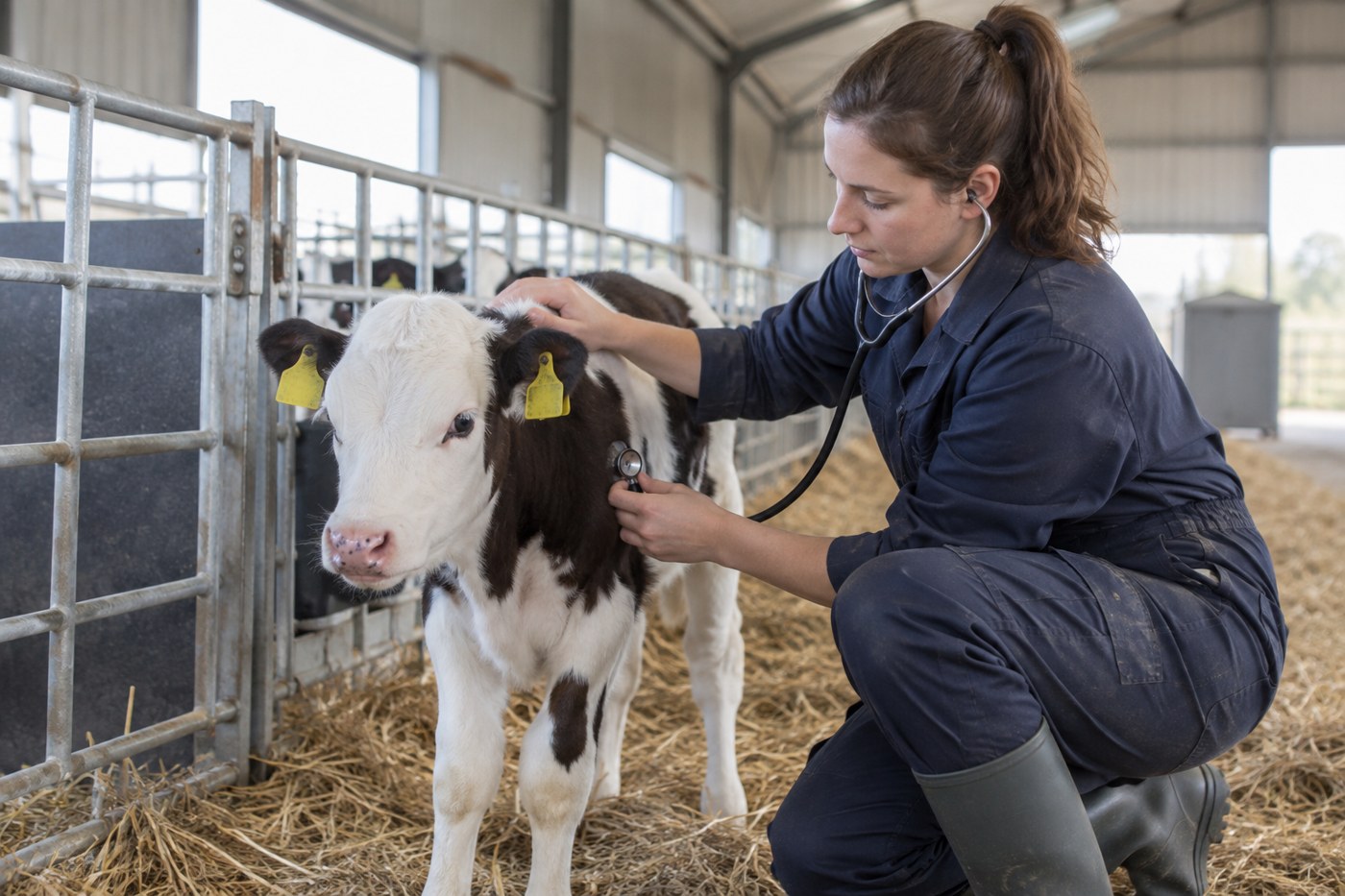
Agricultural equipment mechanic: $63,850, growing 7%, and it typically asks for a high school diploma rather than a degree. Modern farm machinery is a computer with wheels — GPS guidance, sensors, hydraulics, diagnostics — and the shops that service it are short of people who can work on both the software and the steel. Our research points to it as the strongest combination of pay, growth and open entry in this industry.

Start
Farm hand, equipment shop helper or veterinary assistant. No degree needed; you learn whose problems you like solving.
Get the skill
Equipment technician certification or a two-year veterinary technology program. $47,380 to $63,850, often with employer help.
Specialize
Agricultural engineer or food scientist at $81,970 to $98,590, with a bachelor's degree behind you.
Own it
Run the operation as a farm or ranch manager at $89,900, or practise as a veterinarian at $130,100.
Get on to a farm, a dairy, an equipment dealership or a veterinary practice while you are still deciding, and let the work tell you which side of this industry you belong on. The agricultural businesses, equipment dealers, veterinary practices and colleges on CareerPathway.com post their entry roles, apprenticeships, certificate programs and training support together — create a free profile and you can see who is hiring and what they will train you to do.
Do I need to own land to work in agriculture?
No, and our research suggests the roles that do not require it are the ones growing. Agricultural engineers, food scientists, equipment mechanics and veterinary technicians all work in agriculture without owning a single acre.
What agriculture job pays best without a four-year degree?
Agricultural equipment mechanic, at a median of $63,850 and growing 7%, typically requires only a high school diploma plus training. Farm and ranch managers earn more at $89,900, but that usually depends on years of experience and access to land.
Is farming a shrinking industry?
The farming roles themselves are. Federal projections show farmers and ranchers declining 3%, agricultural workers 2% and logging workers 5% through 2035. The technical and scientific roles around agriculture are growing 4% to 9% over the same period.
How long does it take to become a veterinary technician?
Typically a two-year associate's degree, after which the role pays a median of $47,380 and is growing 9%. Many students work as veterinary assistants while they study.
Pay and job outlook figures: U.S. Bureau of Labor Statistics, Occupational Outlook Handbook — 2025 median pay and 2025–2035 projections.