.png)
.png)
More young people have a retail job than any other kind, so this page is not going to tell you to get one. You probably already have it, or you can get it next week. This page is about the question nobody asks you at the register: what are you aiming at next? Because the two most common jobs in this industry are the two with no room left in them, and the roles one step across are worth $45,000 to $148,000.

Retail salesperson
$35,560
Cashier
$32,880
Customer service representative
$44,770
That is the truth about the front of the store: the pay is low and the headcount is not growing. It is still a legitimate first job — it teaches you to handle people, money and pressure, and it pays you while you work out what is next. What it is not is a plan.
Sales manager
$148,270
Purchasing agent or buyer
$81,670
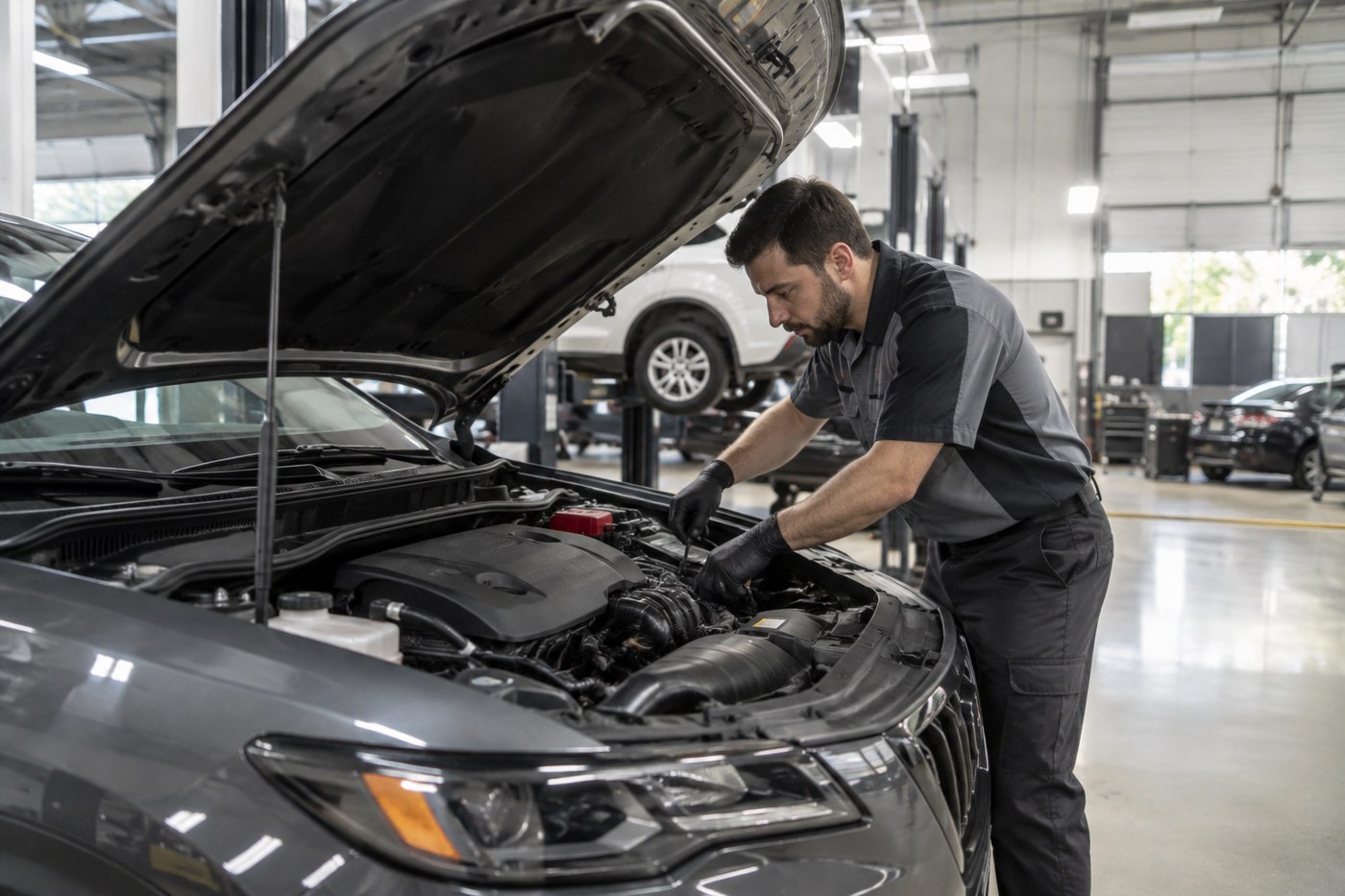
Automotive service technician
$50,620
Pharmacy technician
$45,750
If you are working a register now, pharmacy technician is the shortest credible move: a high school diploma plus certification, $45,750 and growing 6%, often inside the same chain that already employs you. Many retail pharmacies will train and certify people they already have.
The second is automotive service at $50,620 and growing 5% — a certificate rather than a degree, and dealerships routinely hire apprentices with no experience. Both of those roles grow while the register jobs do not, and neither asks you for four years of tuition.

Then be deliberate about it, because the ceiling is high. A sales manager earns a median of $148,270, and in our experience those people are very rarely hired from outside — they are the ones who learned the product, hit their numbers and got moved up. Buying, at $81,670 and growing 6%, is the other route: the person who decides what the store stocks started out selling it. Retail rewards the people who treat the floor as an apprenticeship rather than a shift.
Where you are
Cashier at $32,880 or sales floor at $35,560. Hired fast, no credential, and a genuinely useful place to learn how to deal with people.
Step across, not up
Pharmacy technician at $45,750 or automotive service at $50,620 — both growing, both a certificate, both often trained by the employer.
Or go deeper in sales
Shift lead, department lead, then buying at $81,670 and growing 6%.
The ceiling
Sales manager at $148,270 — almost always someone who started on a floor like the one you are standing on.
You are probably already in. The move is to find out which employer will train you into the next role — the pharmacy, the service bay, the buying office. The retailers, dealerships, pharmacies and colleges on CareerPathway.com post their openings, apprenticeships and certificate programs in one place, and switch hiring on and off as they need people. Create a free profile and find the employer who will pay for your next step.
Are retail jobs going away?
Some are contracting. Federal projections through 2035 show cashiers declining 6% and customer service representatives 5%, while retail salespeople stay flat. There are still millions of these jobs, but the headcount is not growing.
What is the best next step from a retail job?
Pharmacy technician is the shortest one: a high school diploma plus certification, a median of $45,750 and 6% growth, often available inside the same chain. Automotive service technician at $50,620 and 5% growth is the other, through a certificate rather than a degree.
How much does a retail manager make?
Sales managers earn a median of $148,270 per year with 4% projected growth. In our experience these roles are filled by promotion from the sales floor far more often than by outside hiring.
Is a first retail job worth taking?
In our view yes, as a first job rather than a destination. It pays you while you learn to handle customers, money and pressure, and those skills carry into every role on this page — but the growth is in the roles one step across, not at the register.
Pay and job outlook figures: U.S. Bureau of Labor Statistics, Occupational Outlook Handbook — 2025 median pay and 2025–2035 projections.